
Compassion’s Frenemy
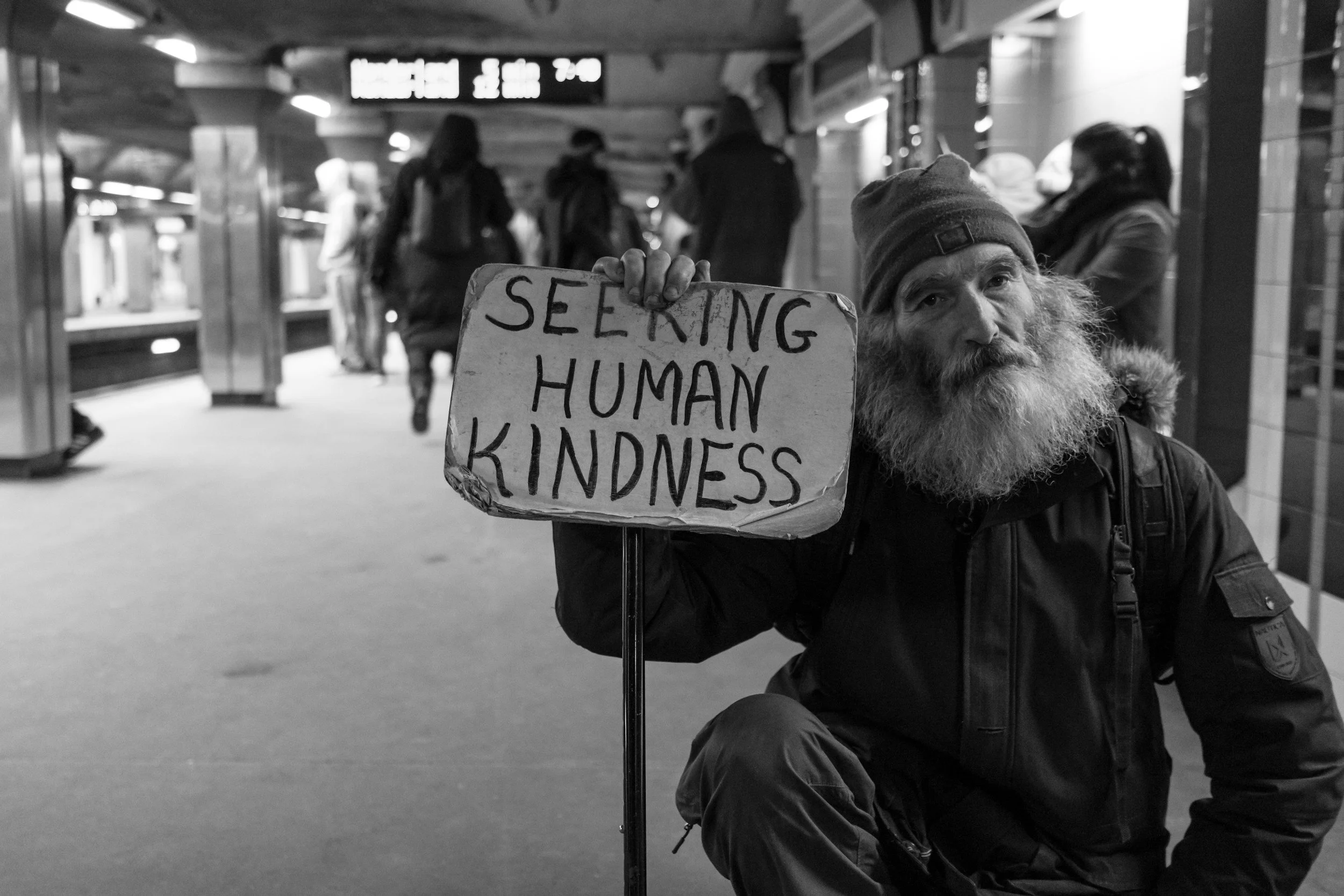
Have you ever shared something deeply painful with someone, only to be met with, “Oh, you poor thing—I feel so sorry for you”?
Whether or not you have, take a moment to imagine it. In fact, close your eyes, and with as much detail as you can, really imagine a tough situation, relaying the experience to someone, and having them respond in that way.
How do you feel?
Based on common responses, I would expect not great. Maybe irritated. Uncomfortable. Or at best, unsatisfied. The response seemed sympathetic, and you think it should have left you feeling better, more supported, and connected, but something is off. Instead, you feel disconnected. Smaller. Diminished.
That’s because you’ve been hit with the near enemy of compassion: pity.
Frenemy, My Near Enemy
We all know that friend – the one who claims to care but consistently says and does things which undermine you and make you feel worse about yourself. This “frenemy” wears the mask of a friend but doesn’t play like they are on your side.
There is a similar concept for virtuous qualities (like compassion), one that has come out of Buddhist psychology: near and far enemies.
According to Dr. Chris Grimer:
“Near enemies are states that appear similar to the desired quality but actually undermine it. Far enemies are the opposite of what we are trying to achieve.”
Near enemies are especially insidious; while far enemies are the obvious opposite, near enemies hide in plain sight. Near enemies (and here I am borrowing from Brené Brown) masquerade as the virtue but quietly undermine/unravel/corrode it. They are deceptive approximations that are born from a very different place and lead to very different outcomes.
Let’s look more closely at compassion and its near enemy, pity.
Based on Kristin Neff’s model, true compassion includes three elements: kindness and care along with a genuine desire to help, the ability to see suffering clearly without minimization or exaggeration through mindful awareness, and a sense of common humanity.
Pity, by contrast, involves feeling sorry for someone -- but from a distant, and often subtly superior position.
The impact is completely different. Pity can feel patronizing, judgmental, or diminishing and it breeds separation, while compassion feels validating, connected, and connotes a sense of being with someone.
Born of Love, or Born of Fear?
Compassion, like all virtuous qualities, is born from love and connection. Pity, like all other near enemies, comes from fear and a need for ego-protection.
When we express pity over compassion, we protect ourselves with a wall of superiority; treating the problem as a “them” issue that would never touch us. We might feel truly sorry for the other person, but their plight has no real implication for us, hence we are protected from truly connecting to their pain.
The near enemy masquerades as virtuousness but always serves to protect one’s own ego.
Consider, for example the following virtuous qualities and their near enemy:
Love versus clingy or grasping attachment
Discipline versus rigidity
Equanimity versus indifference
Confidence versus Hubris
Kindness versus Selflessness or Martyrdom
Hope versus Blind Optimism
If we sense into the near-enemies and begin to connect with what these emotional qualities feel like in our body, we can start to detect their protective tightness.
Sensing the ego-protection, defensiveness, or fear can then help provide insight into whether we are living in true virtuousness or whether we are in near-enemy territory.
Compassion and Social Justice
The concept of near and far enemy is, I think, particularly relevant now. Every day on our feeds and in the news are unimaginable stories of human suffering.
Our capacity to contribute to the world’s healing requires we build awareness around the distinction between compassion and pity and also build our skillset of recognizing and naming the near-enemy of the good we want to do in the world so we can catch it when it invariably shows up.
I’ve volunteered or been involved in the non-profit sector since I was 11 years old, and over time I’ve come to dislike, mistrust, and eventually hate the term we used back then: charity.
It now gives me the ick.
In trying to understand my own reaction to the term, I realized it was due to a masked insinuation of hierarchy; the poor ones who suffer and the magnanimous savior who helps. There is an implied inequality in status and capacity: the powerful helping the meek.
I’ve come to see how the term charity carries the aura of pity. It lacks recognition of the strength of the person in front of you, their innate value, and our shared humanity.
When we act from pity, or out of charity, we may feel good about ourselves, but if we don’t approach the other as our equal, we will often end up doing more harm than good. Instead, a social justice perspective built on true compassion recognizes that the difference between me and a person from an impoverished settlement, is simply that they grew up in abject poverty while I grew up with opportunity. There is not that whisper of less than or more than, only pure injustice.
If we want to help in the healing that is so desperately needed today, we need to open our hearts to feel the exquisite connection and pain of true compassion. Our hearts need to break open. And only then can we give and heal in a true sense.
The far enemy of compassion is hatred or cruelty, or what I believe to be equally cruel: indifference.
Each of us must decide how we want to show up: with compassion, with pity, or with indifference. We need to decide who it is we want to be.